Safe digging · Vacuum excavation · Underground services · Method
What Is Vacuum Excavation? A Safer Way to Dig Around Live Services
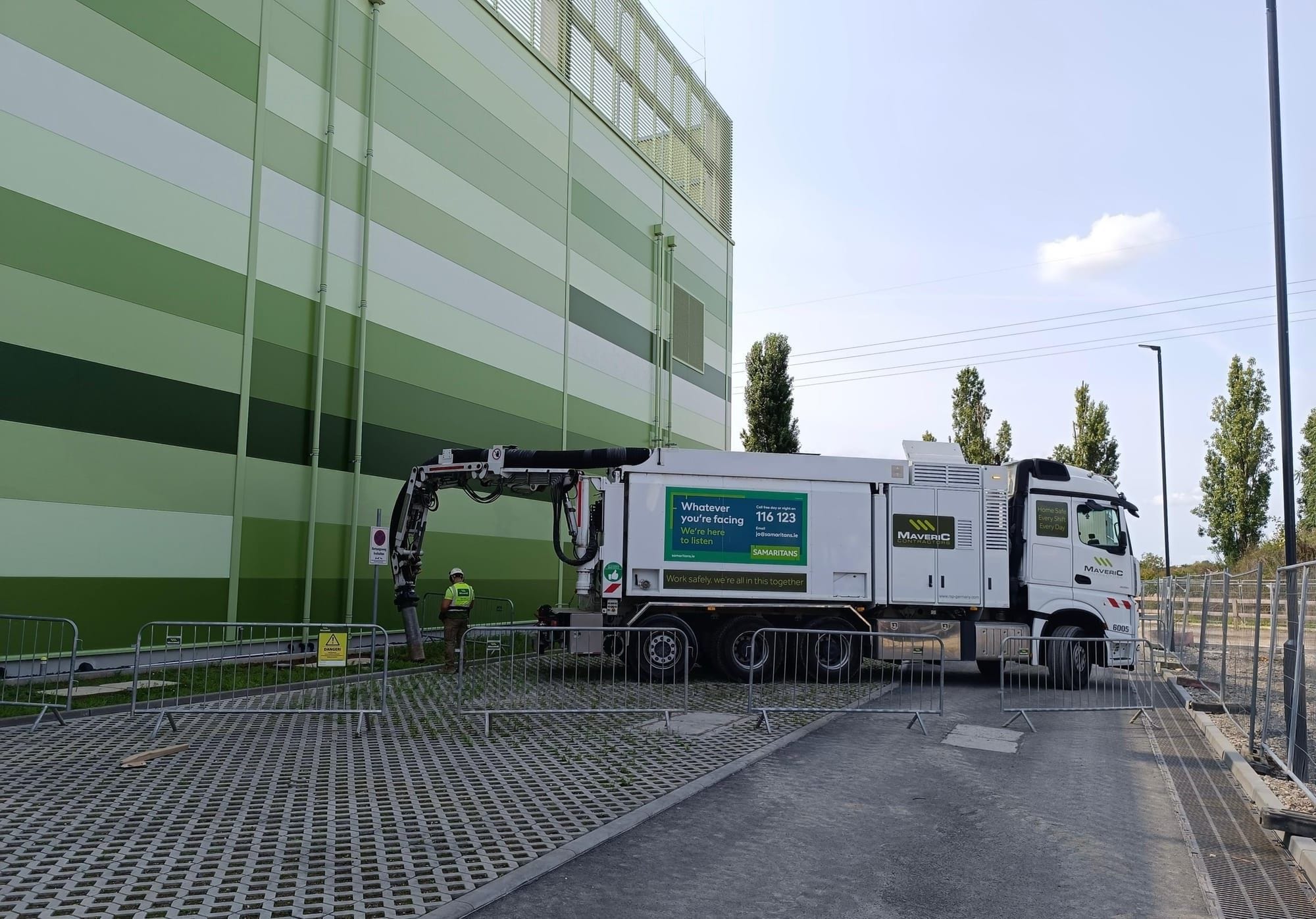
The most dangerous moment on many civil engineering sites is not the heavy lift or the deep pour. It is the first bucket of soil over a service that nobody has positively located. So what is vacuum excavation, and why has it become the default method for digging safely around live underground utilities? In short, it is a non-mechanical way of removing ground using suction rather than a digging edge, so cables, pipes and ducts can be exposed without being struck and without an operative working in the trench.
This article is a contractor's explainer. It sets out how suction excavation works, where it is used, and how Maveric runs it as one safe-dig method within a wider detect-then-expose approach, paired with ground-penetrating radar rather than treated as a standalone hire line. The aim is to give clients, main contractors and engineers a clear, accurate reference rather than a sales pitch.
What is vacuum excavation?
Vacuum excavation, also called suction excavation, is a method of removing soil and spoil using a powerful airflow instead of a mechanical bucket or a hand tool. The ground is loosened, then drawn up through a wide hose into a holding tank on a vacuum excavator, also called a suction excavator truck. Because nothing with a cutting edge enters the excavation, the method exposes buried services without the impact, crush or tearing forces that cause strikes.
Two loosening techniques are in common use. Air excavation uses a high-pressure air lance to break up the ground and keeps the spoil dry, so it can often be reinstated. Hydro excavation uses a pressurised water jet, which suits harder or more compacted ground but produces a wet slurry to manage. In both cases the principle is the same: separate the act of breaking ground from the act of removing it, and keep tools and people away from the service itself.
How suction excavation works on site
On a working face the sequence is deliberate and repeatable. It is the discipline of that sequence, not the machine alone, that delivers the safety outcome. The operative controls the boom from outside the excavation, so the trench can be opened, the service exposed and the ground reinstated without anyone climbing in.
- Locate first. Buried services are traced and marked with detection equipment before any ground is broken.
- Loosen. An air lance or water jet breaks up the soil immediately around the marked service.
- Extract. The suction hose draws the loosened spoil into the on-board tank, away from the dig.
- Expose. The service is uncovered cleanly, intact and visible for connection, survey or repair.
- Reinstate. Dry spoil can be returned to the excavation, reducing imported fill and waste.
Why vacuum excavation is the safer method around live services
Conventional digging around live utilities carries two compounding risks. A mechanical excavator can strike and rupture a cable or pipe before anyone sees it, and hand-digging puts an operative in the trench alongside the very hazard they are trying to expose. Safe digging around live services means designing both of those risks out, and that is what suction excavation does.
There is no digging edge to make contact, so a high-voltage cable, gas main or fibre duct is uncovered rather than cut. And because the boom is operated from grade, no operative needs to stand in an open excavation next to an energised service. The result is fewer strikes, fewer near-misses and no exposed crews in the trench, which is why the method sits naturally under the safety commitment Maveric makes on every shift.
Where vacuum excavation is used
As a method it earns its place wherever the ground is congested, the services are live, or the consequences of a strike are unacceptable. Across mission-critical infrastructure such as data centres, substations and grid, battery energy storage, renewables and semiconductor sites, that describes a great deal of the buried scope.
Typical applications include:
- Utility location and positive identification, confirming the depth and alignment of services before bulk excavation begins.
- Trial holes and slot trenches, small controlled digs to verify what detection has indicated without committing a machine.
- Working around HV cables, gas and water mains and telecoms ducts, where a strike would be dangerous or disruptive.
- Pole, sign and street-furniture holes formed cleanly next to existing services.
- Exposing services for connection, diversion, survey or as-built record before reinstatement.
How Maveric uses vacuum excavation as a safe-dig method
Maveric does not treat vacuum excavation as a product or a truck to hire out. It is one method within a detect-then-expose approach to underground risk, self-delivered by Maveric's own crews and plant rather than subcontracted.
Before ground is broken, ground-penetrating radar, including a GPR scanning bucket that reads the ground as the machine digs, locates and marks buried services live rather than relying on records alone. Suction excavation then exposes those services without contact. Every service identified is captured in Maveric's in-house digital backbone, so what was found underground is carried through to a complete as-built record at handover. Detection and safe excavation work as one workflow, not two disconnected steps.
This sits alongside the rest of Maveric's safe-dig and site technology, including GPS machine control for accurate setting-out and AI proximity detection that stops plant before contact, under management systems aligned to ISO 45001, ISO 14001 and ISO 9001.
Vacuum excavation in Ireland, Galway and beyond
For clients searching for vacuum excavation in Ireland — whether the work sits in Galway, Dublin, Cork or elsewhere on the data-centre and energy network — the question is rarely about the machine itself. It is whether the contractor can locate services accurately, expose them safely, keep crews out of the trench and hand over a verified record of what is in the ground. Maveric delivers vacuum excavation as part of its civil and enabling works across Ireland, Germany and Norway, integrated with detection rather than offered in isolation.
Used well, the method changes the economics of working near live services: fewer strikes, less standing time, less disruption to operations and a cleaner safety record. Used as a standalone hire line, it does none of that. The value is in the discipline around it: locate first, expose without contact, record everything.
Frequently asked questions
What is vacuum excavation in simple terms?
It is a method of digging that removes soil with powerful suction instead of a mechanical bucket or hand tool. Because nothing with a cutting edge enters the ground, buried services can be uncovered without being struck.
What is the difference between air and hydro suction excavation?
Air excavation uses a high-pressure air lance to loosen the ground and keeps the spoil dry, so it can often be reinstated. Hydro excavation uses a pressurised water jet, which suits harder ground but produces a wet slurry to manage.
Why is vacuum excavation safer than digging by hand or by machine?
It removes the two main risks of working near live utilities: there is no digging edge to strike a cable or pipe, and the boom is controlled from outside the excavation, so no operative has to stand in the trench.
When should vacuum excavation be used?
It is used wherever services are live or the ground is congested. Common uses are utility location, trial holes and slot trenches, and exposing high-voltage cables, gas and water mains and telecoms ducts before bulk excavation or connection works begin.
Is vacuum excavation just a suction truck for hire?
No. The machine is only part of it. The value is in the method around it: locating services with ground-penetrating radar first, exposing them without contact, and recording every service found as a verified as-built.
Does Maveric offer vacuum excavation in Ireland?
Yes. Maveric self-delivers vacuum excavation as a safe-dig method within its civil and enabling works across Ireland, Germany and Norway, paired with GPR detection rather than offered as a standalone hire service.