
Data centres · Enabling works · On-site power · Civil engineering
Enabling Works for Data Centres With On-Site Power Generation
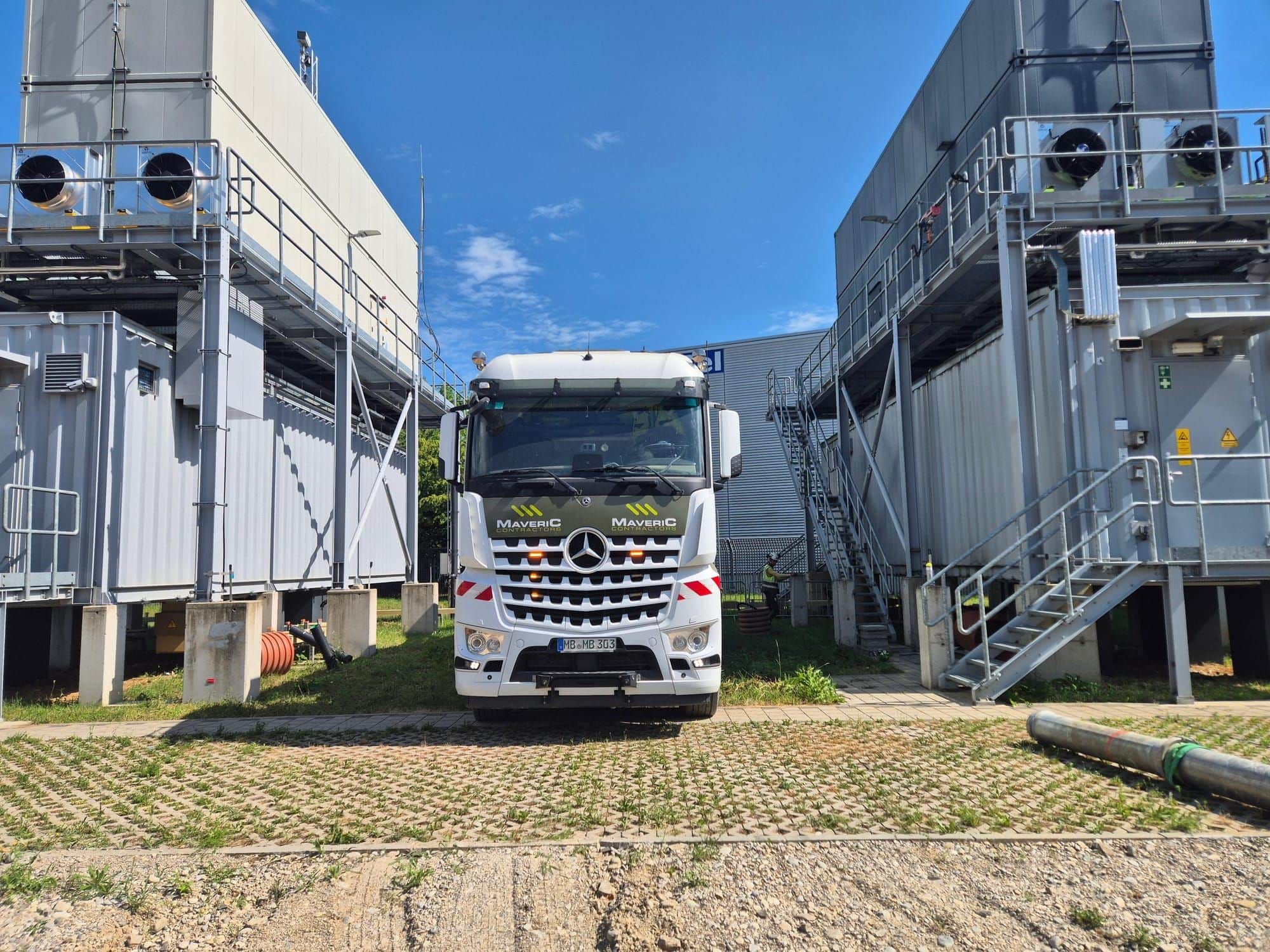
Across Europe, grid connection is now one of the longest items on a data-centre programme. Where the network cannot deliver full capacity on the day the building needs it, schemes increasingly depend on on-site or temporary generation to energise early loads and bridge the gap to a permanent connection. None of that power arrives without civil engineering underneath it.
Enabling works for data centres are the works that turn a raw or constrained site into a platform the main build can start on. When on-site power generation is part of the picture, those enabling works carry a heavier scope: the foundations, containment, deep services and fuel or process infrastructure that generation and switchgear plant sit on. Get this phase right and the main contractor inherits a site that is safe, surveyed, drained and ready. Get it wrong and the programme absorbs the cost for the rest of the build.
This article sets out what data centre enabling works involve, why on-site power generation makes them more demanding, and how the early civil scope is sequenced to set up everything that follows.
What enabling works for data centres actually cover
Enabling works are the first construction phase on a data-centre site. They take ground that may be undeveloped, contaminated, poorly drained or carrying unknown buried risk, and deliver a controlled, level, serviced platform that the main building works can begin on without delay. The phase is part civil engineering and part risk reduction: most of the ground uncertainty on a project is resolved here, before the heavy permanent works commit to a sequence.
On a large data-centre campus the enabling package is broad. It runs from site establishment and logistics through to the deep services and structural foundations that the rest of the programme depends on.
- Site establishment — welfare, compounds, hoarding, access roads, haul routes and laydown areas
- Bulk earthworks — topsoil strip, cut-to-fill, engineered platforms and ground stabilisation
- Ground risk — ground investigation, contaminated-soil handling, dewatering and groundwater control
- UXO survey and clearance where the ground history warrants it
- Deep drainage and underground utilities — stormwater, foul, firewater, and HV/MV/LV duct banks
- Reinforced foundations and slabs for buildings, plant and equipment
On-site power generation: why the enabling works get heavier
When a site cannot draw its full demand from the grid in time, on-site generation becomes part of the delivery strategy rather than a contingency. That decision lands squarely on the enabling works, because generation plant — whether permanent sets, switchgear or a temporary power compound — needs civil infrastructure built before it can be installed, fuelled and connected.
The added scope is specific and unforgiving. Generation and switchgear are heavy, vibration-sensitive and tightly tolerated, so their foundations must be designed and constructed to long-term stability tolerances rather than approximate ones. Fuel handling brings deep tank foundations, containment bunds and spill-management civils that have to satisfy environmental and authority requirements. And the whole assembly has to be tied into deep services and a drainage strategy that was planned, not retrofitted.
Temporary power for data centre construction adds another layer. Early site loads, the main build itself and first energisation of equipment often run on temporary generation before the grid connection is live. Designing the enabling works so a temporary supply and its compound can stand up early — and be removed cleanly later — is part of doing the phase properly.
The civil scope beneath generation and switchgear plant
The reinforced civils that carry generation and electrical plant are where enabling works for data centres become genuinely structural. This is reinforced concrete work — formed, reinforced and placed to carry concentrated loads and resist the vibration and thermal movement that rotating and switching plant produce over a long service life.
Maveric self-delivers this scope with its own crews and plant rather than subcontracting it, which keeps the foundations, the deep services around them and the platform they sit on under one set of hands and one quality record. The typical scope on a generation-enabled site includes:
- Reinforced concrete foundations, plinths and bases for generation sets, transformers and switchgear
- Heavy-duty hardstands and operational pavements for plant access and maintenance
- Deep tank foundations with reinforced bases for fuel storage, with containment bunds and spill civils
- HV/MV/LV duct banks, reinforced cable pits and underground chambers tying plant into the network
- Blast walls and earthing where the electrical arrangement requires them
- Process-gas and water service corridors where the facility scope demands them
Deep services, drainage and the grid connection corridor
Underneath the platform sits the buried infrastructure that makes a data centre work. Stormwater and foul networks have to be sized for the runoff of a large campus and the hardstanding that surrounds generation compounds. Firewater mains, hydrant networks and the foundations for tanks and pump houses are built to project, insurer and authority requirements. None of it is easy to revisit once the slab is down, so it is laid early, to capacity, for equipment that has not yet arrived.
The grid connection for a data centre is a civil scope in its own right. Whether the permanent supply arrives on the day generation is needed or follows later, the corridor from the site boundary to the network connection point has to be dug, ducted and reinstated — multi-way duct banks, cable trenches and chambers that the eventual connection threads through. Sequencing this alongside temporary generation is what lets a site energise progressively as capacity becomes available.
How enabling works set up the main build
The purpose of the enabling phase is to remove uncertainty from everything downstream. By the time the main contractor mobilises, the platform is level and stable, the ground risk has been investigated and dealt with, the deep services are in, and the foundations for power and plant are formed and tested. The build inherits a known quantity rather than a list of open questions.
Doing that reliably depends on how the phase is run, not just what is in it. Buried services are found and exposed without strikes using ground-penetrating radar and vacuum excavation. Setting-out and earthworks are controlled by GPS machine control. Material testing, inspections and as-built records are captured digitally through Maveric's in-house systems, so the handover to the main works is a complete, traceable record rather than a verbal one. All of it runs under Maveric's integrated management system, aligned to ISO 45001, ISO 14001 and ISO 9001.
The result is a phase that pays for itself in programme certainty. A data centre that depends on on-site power to energise cannot afford foundations that need reworking or services that were not planned for capacity. Enabling works done properly are the reason the rest of the build holds its sequence.
Frequently asked questions
What are enabling works for data centres?
Enabling works are the first construction phase that turns a raw or constrained site into a level, serviced, stable platform the main build can start on. They cover site establishment, bulk earthworks, ground risk, deep drainage and utilities, and the reinforced foundations for buildings and plant.
Why does on-site power generation make enabling works more demanding?
Generation plant, switchgear and fuel infrastructure all need civil works built before they can be installed and connected. That adds reinforced foundations to tight stability tolerances, deep tank foundations, containment bunds and additional deep services to the enabling scope.
When does a data centre need on-site or temporary power generation?
Most often when grid capacity cannot deliver the site's full demand by the time the building needs it. On-site or temporary generation energises early loads and the construction itself, bridging the gap until the permanent grid connection is live.
What civil works sit beneath generation and switchgear plant?
Reinforced concrete foundations, plinths and bases designed to carry concentrated loads and resist vibration, plus heavy-duty hardstands, deep fuel-tank foundations with containment, HV/MV/LV duct banks, cable pits, and earthing or blast walls where required.
Is the grid connection part of the enabling works?
The civil corridor for it usually is. Multi-way duct banks, cable trenches and chambers run from the site boundary to the network connection point, dug and reinstated early so the eventual connection can be threaded through and the site can energise progressively.
How do enabling works set up the main build?
They resolve the ground uncertainty and deliver a level, drained, serviced platform with foundations formed and tested, plus a complete digital handover record. The main contractor then inherits a known site rather than a set of open risks, which protects the programme.